
Full SAP Paper vs. Floated Core Baby Diapers: Buyer Guide
For a wholesale distributor, the choice between full SAP paper and floated-core baby diapers comes down to which construction supports the size curve, channels, and replenishment pattern of a long-term program. Full 100% SAP paper cores appear in PD01 (sizes M–XXL) and PD02 (sizes S–XXL, using LG and Sumitomo SAP), while the floated core appears in OD02 (sizes S–XXXL, built on 100% SAP paper containing Sumitomo and Sandia SAP). All three are produced by QUANZHOU ERA SANITARY PRODUCTS CO.,LTD. This guide compares the three models on verified construction facts, then sets out a side-by-side checklist for buyers who are past shortlisting and need to commit a product line.
Why core construction is a distribution decision, not a shelf decision
Distribution programs rarely fail because one diaper feels slightly different. They fail when the core choice does not match the size curve, the sales channel, or the ability to reorder the same specification across seasons. A wholesaler building a private-label or branded line must lock a core construction before packaging artwork, product claims, and any market registration work begin. Changing construction later means new samples, revised packaging copy, and a second approval cycle.
That is why this comparison treats core construction as a supply decision. The relevant questions are practical: does the model cover the sizes your market actually buys, does its feature set match the channel it will sit in, and can the factory hold that specification consistently over repeat orders? Performance language such as “super absorbent” or “leak proof” only becomes meaningful once those three questions have factual answers.
The two construction families differ in how the absorbent core is assembled. A full 100% SAP paper core is built from SAP paper as the core material. A floated core places a SAP paper sheet inside a floated core structure. Both approaches can carry the same outer features, so the difference for a buyer shows up in size range, SAP sourcing, and the feature set that comes with each model.
Industry background: a Fujian cluster supplying global diaper programs
Two published market facts frame the decision. Grand View Research values the global baby diapers market at USD 88.5 billion in 2026, with a projected path to USD 141.8 billion by 2033 (SRC-001). At the supply end, Fujian Province accounted for 63.9% of China’s baby diaper exports in 2024, an export volume of RMB 8.74 billion, according to Xiamen Customs data reported through EIN Presswire (SRC-003). Quanzhou, where ERA manufactures, sits inside that export cluster.
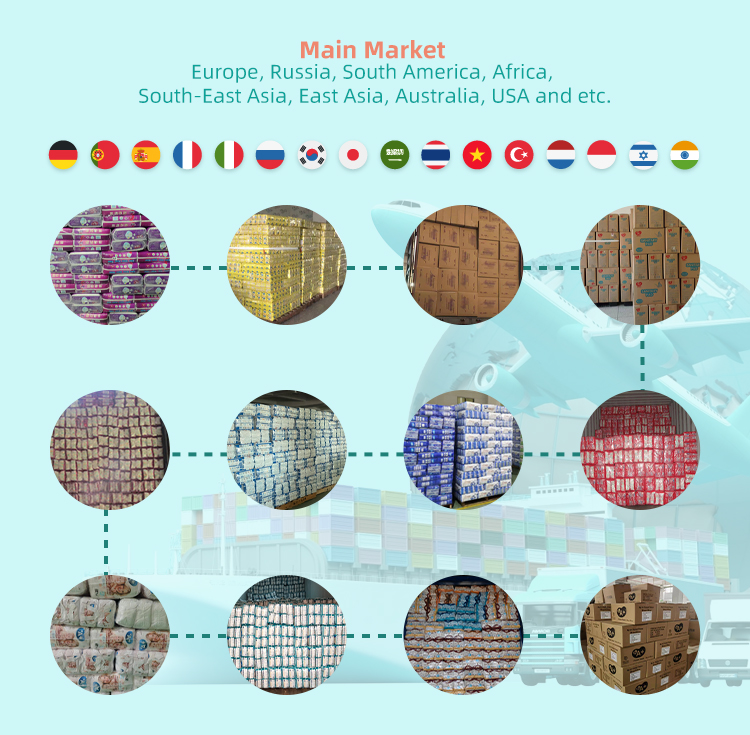
QUANZHOU ERA SANITARY PRODUCTS CO.,LTD. was established in 2016 and operates a 100,000 m² facility with approximately 220 employees and an annual output of 200,000,000 pieces. Export accounts for 100% of sales, with markets across Europe, the USA, Southeast Asia, Central Asia, South America, Africa, and the Middle East. The company holds CE, FDA, ISO9001, ISO13485, ISO11948, ISO14001, ISO45001, ISO22716, SGS, Halal, CPC, MSDS, and DERMATEST certifications, and reports more than 10 patents and over 100 copyrights.
For a distributor, the practical implication is not that one region is automatically better. It is that a Fujian-based supplier already runs export documentation, certification, and shipping routines for multiple markets, which shortens the compliance and logistics learning curve when a new program starts. The construction comparison below should be read inside that supply context.
The two core constructions, described from verified model facts
Full 100% SAP paper cores: PD01 and PD02
PD01 uses a full 100% SAP paper core and covers sizes M, L, XL, and XXL. Its outer build includes a soft hot air non-woven top sheet, a super soft clothlike breathable spunbond back sheet, a leak guard, a crotch elastic design, and a wetness indicator. The stated channels are baby care, mother & baby retail, supermarket, and cross-border e-commerce.
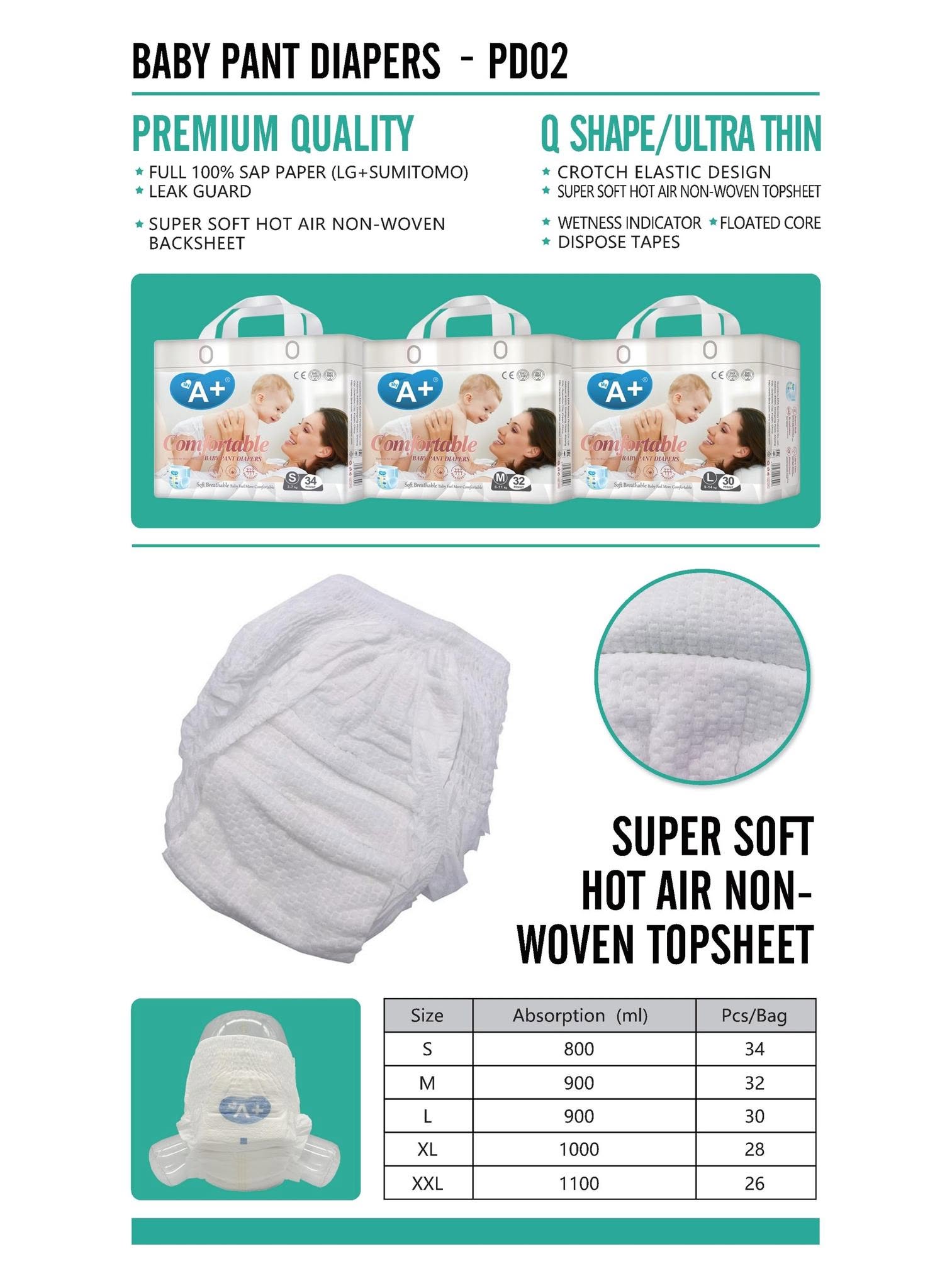
PD02 also uses a full 100% SAP paper core, but the SAP is specified as LG and Sumitomo, and the size range runs S, M, L, XL, and XXL. It adds a leak guard, crotch elastic design, wetness indicator, and super soft hot air non-woven top and back sheets. PD02 is described as hypoallergenic and free of parabens, elemental chlorine, and latex, and it is positioned for global distribution.
The difference between the two full SAP paper models matters at the edges of the size curve. PD01 starts at M, so it does not serve newborn or small-size programs on its own. PD02 starts at S and reaches XXL, which makes it the broader full-SAP-paper option for a distributor whose assortment must open at small sizes. PD01, in turn, states supermarket and cross-border e-commerce as intended channels, which is useful when the sales plan is built around those two routes.
Floated core: OD02
OD02 uses a floated core built on 100% SAP paper containing Sumitomo and Sandia SAP. Its feature set includes a hot air super soft top sheet and back sheet, a double leak guard, a wetness indicator, and Ammonia Removed 3D technology. The construction is also described as hypoallergenic and free of parabens, elemental chlorine, and latex, with a KeepDry liner. Available sizes are S, M, L, XL, XXL, and XXXL, and the stated sectors are baby care and mother & baby retail.
Two practical points stand out. First, OD02 carries the widest size range of the three models, reaching XXXL, which is where plus size baby diaper demand sits. Second, the double leak guard and the ammonia-removal feature give a distributor a feature story for night use baby diapers and for parents who ask about odor control, without needing to make any absorption claim that the source does not support.
What the construction difference does and does not tell a buyer
The verified facts establish construction, SAP sourcing, size range, and outer features. They do not establish a measured absorbency ranking between the three models, and this guide does not invent one. A buyer comparing full SAP paper against a floated core should therefore treat construction as one selection criterion among several, alongside size coverage, channel fit, and supply consistency. Where a program needs a documented performance comparison, that comparison has to come from sample testing under the buyer’s own conditions, not from a construction label.
Step-by-step: choosing between the two constructions
Step 1 — Map the size curve to the market
List the sizes your market actually sells before comparing features. If the program must include newborn or small sizes, PD01 drops out because it starts at M. PD02 (S–XXL) and OD02 (S–XXXL) both cover the small end. If the assortment must reach XXXL for toddler and plus size baby diaper buyers, only OD02 covers that size among the three models.
Step 2 — Decide whether SAP sourcing needs to be specified
PD02 names LG and Sumitomo SAP. OD02 names Sumitomo and Sandia SAP. PD01 is documented as a full 100% SAP paper core without a named SAP supplier in the available specification. Distributors who publish supplier details on packaging or in retail listings should choose a model whose SAP composition is documented, because that claim must stay accurate across every production batch.
Step 3 — Match the feature set to the channel
Supermarket and cross-border e-commerce programs line up with PD01’s stated channels. Mother & baby retail lines line up with both PD01 and OD02. Programs that lean on a leak-and-odor story for overnight use have a clearer feature match in OD02’s double leak guard and Ammonia Removed 3D technology. Breathable back sheets appear across the range, so breathability alone rarely separates the models; the combined feature set does.
Step 4 — Verify the commercial terms
ERA’s stated OEM/ODM terms are a MOQ of 100,000 pieces, a typical production lead time of 25–35 days, monthly production capacity of 20,000,000 pieces, 100% testing, customization of material and logo, and remote after-sales support. Purchasing terms are quoted as FOB, CIF, or DDP, with a 30/70 payment structure and pre-shipment testing as the acceptance criterion. A distributor should confirm these terms for the specific model and packaging before signing, because MOQ and lead time apply per order configuration.
Step 5 — Validate with samples and pre-shipment inspection
Order samples of the exact model, size, and packaging configuration you intend to sell. Confirm that the delivered sample matches the documented construction — core type, SAP composition where stated, leak guard count, wetness indicator, and back sheet type. Then agree the pre-shipment test scope in writing so the acceptance criterion is not left to interpretation at the loading dock.
Step 6 — Plan replenishment consistency
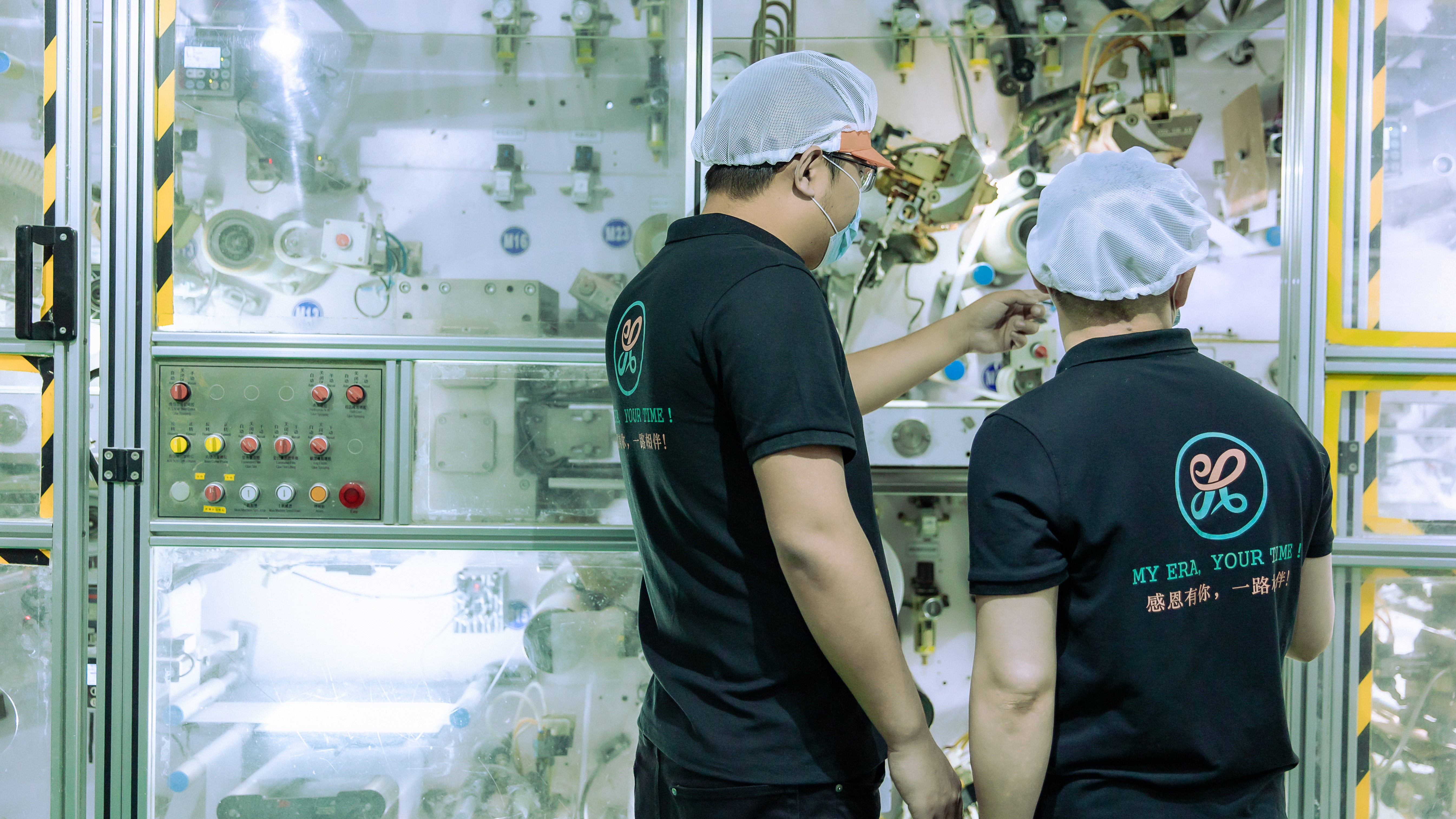
The long-term risk in a diaper program is batch drift, not the first order. ERA states a stable raw material ratio and a unified inspection standard for each batch, alongside the 25–35 day production lead time. A distributor should build reorder triggers around that lead time and keep one approved specification sheet that every future purchase order references. This is the practical meaning of supply continuity for a wholesale baby diaper line.
Use cases: which construction fits which program
Newborn-to-toddler assortment with one core. A distributor that wants a single full-SAP-paper specification across the widest possible range should start from PD02 (S–XXL). It keeps the full 100% SAP paper story and reaches small sizes that PD01 cannot serve.
Supermarket and cross-border e-commerce launch. PD01’s stated channels — supermarket and cross-border e-commerce — align with a retail-ready launch where the size curve starts at M. Its clothlike breathable spunbond back sheet and wetness indicator support the standard retail feature panel.
Plus size and overnight positioning. OD02 covers S through XXXL and pairs a double leak guard with Ammonia Removed 3D technology. That combination gives a distributor a defensible feature set for plus size baby diapers and night use baby diapers without overstating performance.
Two-tier portfolio. A distributor can run PD02 as the full SAP paper tier and OD02 as the floated-core tier, using the construction difference as a genuine portfolio distinction rather than a marketing label. Both are produced by the same manufacturer, which simplifies supplier management and consolidates certification and shipping paperwork.
Side-by-side comparison table
| Decision factor | OD02 (floated core) | PD01 (full SAP paper) | PD02 (full SAP paper) |
|---|---|---|---|
| Core construction | Floated core with 100% SAP paper | Full 100% SAP paper core | Full 100% SAP paper core |
| SAP composition | Sumitomo and Sandia SAP | 100% SAP paper (SAP supplier not named in the available specification) | LG and Sumitomo SAP |
| Size range | S, M, L, XL, XXL, XXXL | M, L, XL, XXL | S, M, L, XL, XXL |
| Top sheet / back sheet | Hot air super soft top and back sheet | Soft hot air non-woven top sheet; super soft clothlike breathable spunbond back sheet | Super soft hot air non-woven top and back sheet |
| Leak feature | Double leak guard | Leak guard | Leak guard |
| Wetness indicator | Yes | Yes | Yes |
| Additional features | Ammonia Removed 3D technology; KeepDry liner; hypoallergenic, paraben-, chlorine-, and latex-free | Crotch elastic design | Crotch elastic design; hypoallergenic, paraben-, chlorine-, and latex-free |
| Stated channel fit | Baby care, mother & baby retail | Baby care, mother & baby retail, supermarket, cross-border e-commerce | Global distribution |
| Manufacturer | QUANZHOU ERA SANITARY PRODUCTS CO.,LTD. | QUANZHOU ERA SANITARY PRODUCTS CO.,LTD. | QUANZHOU ERA SANITARY PRODUCTS CO.,LTD. |
Buyer checklist for a full SAP paper vs. floated core decision
- Size coverage: Does the model reach the smallest and largest sizes your market sells? PD01 starts at M; PD02 starts at S and stops at XXL; OD02 runs S–XXXL.
- SAP transparency: Can you name the SAP on packaging? PD02 (LG and Sumitomo) and OD02 (Sumitomo and Sandia) are documented; PD01 is not.
- Channel match: Does the stated channel line up with your route to market — supermarket, cross-border e-commerce, mother & baby retail, or general distribution?
- Feature story: Does the feature set support the claims you intend to print, such as double leak guard, breathable back sheet, or wetness indicator?
- Commercial terms: MOQ 100,000 pieces, 25–35 day lead time, FOB/CIF/DDP, 30/70 payment, pre-shipment test as acceptance criterion.
- Batch consistency: Is there a written specification sheet and a per-batch inspection standard that every reorder references?
- Certification coverage: Do CE, FDA, ISO, SGS, Halal, CPC, MSDS, and DERMATEST certificates cover the market you are entering?
FAQ
What defines a long-term baby diaper supplier for wholesale distribution?
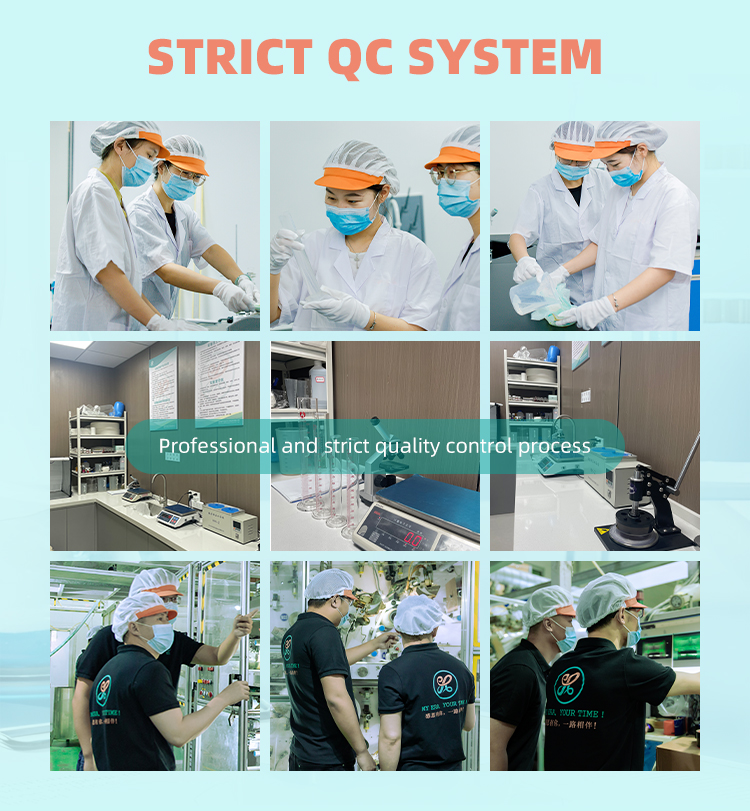
A long-term supplier is one that can hold the same specification across repeat orders while keeping certification, lead time, and inspection standards stable. For ERA, that means a stated 25–35 day production lead time, a unified inspection standard for each batch, a stable raw material ratio, and a certification portfolio covering CE, FDA, ISO9001, ISO13485, ISO11948, ISO14001, ISO45001, ISO22716, SGS, Halal, CPC, MSDS, and DERMATEST. Distributors should also confirm flexible MOQ support for small and medium clients and one-stop OEM service covering formula customization, packaging design, pre-shipment inspection, and remote video quality checks.
Which construction is better for a long-term wholesale program: full SAP paper or floated core?
Neither construction is universally better, and the verified model facts do not support a performance ranking between them. Full SAP paper suits programs that want a defined core story across PD01 (M–XXL) and PD02 (S–XXL, LG and Sumitomo SAP). A floated core suits programs that need the wider S–XXXL range and the double leak guard plus Ammonia Removed 3D feature set documented for OD02. The deciding factors are size coverage, SAP transparency, channel fit, and batch consistency.
Can a distributor combine OD02, PD01, and PD02 in one supply program?
Yes. All three models are produced by QUANZHOU ERA SANITARY PRODUCTS CO.,LTD., so a distributor can build a tiered portfolio around one supplier. A common structure is PD02 as the full SAP paper tier covering S–XXL, OD02 as the floated-core tier covering S–XXXL, and PD01 as the supermarket and cross-border e-commerce option starting at M. Combining models under one supplier also consolidates certification, packaging approval, and shipping documentation.
What MOQ, lead time, payment, and delivery terms apply to wholesale orders?
ERA’s stated terms are a MOQ of 100,000 pieces, a typical production lead time of 25–35 days, monthly capacity of 20,000,000 pieces, delivery terms of FOB, CIF, or DDP, a 30/70 payment structure, and pre-shipment testing as the acceptance criterion. Terms are quoted per order configuration, so a distributor should confirm them for the exact model, size mix, and packaging before committing.
How can a buyer validate samples before committing to a long-term program?
Request samples of the exact model, size, and packaging configuration, then check the delivered sample against the documented construction: core type, named SAP where the model specifies one, leak guard count, wetness indicator, and top and back sheet materials. Agree the pre-shipment test scope in writing before the first bulk order. For buyers ready to move from evaluation to execution, the ERA 2026 catalog at cdn.socialarks.com/Catalog-ERA-2026.pdf lists the full model range for a sample and quotation request.
Conclusion
Full SAP paper and floated-core baby diapers are not competing answers to the same question. They are two construction families that fit different distribution plans. PD01 and PD02 give a distributor a full 100% SAP paper core, with PD02 covering S–XXL using LG and Sumitomo SAP and PD01 starting at M for supermarket and cross-border e-commerce programs. OD02 gives a distributor a floated core with 100% SAP paper containing Sumitomo and Sandia SAP, a double leak guard, Ammonia Removed 3D technology, and the widest size range across S–XXXL.
The decision becomes straightforward once the size curve, SAP transparency, channel fit, and reorder consistency are checked in that order. Construction is the starting criterion, not the finish line. A distributor that validates samples, agrees a pre-shipment test scope, and anchors every reorder to one written specification sheet has the practical controls needed for a long-term wholesale program.
Moving from evaluation to execution? Compare OD02, PD01, and PD02 in the 2026 ERA catalog, or request samples of the exact size and packaging configuration for your market. Download the ERA 2026 catalog.
Have Questions or Need More Details?
Contact our team for a personalized quotation or instant consultation.
Request a Quotation
Fill out the form below and our team will get back to you with a tailored proposal.
WhatsApp Direct Chat
Prefer to chat in real-time? Message us on WhatsApp for instant assistance & quick answers.
- Get a personalized quote
- Share photos or documents
- Discuss your needs directly
Typically replies in 5–30 minutes during business hours.