Baby Diaper Core Basics: Fluff Pulp, SAP Paper, and 100% SAP Explained
Most baby diaper quotations differ in three words: fluff pulp, SAP paper, and 100% SAP paper. This explainer decodes those terms as they are actually written in baby diaper specifications, then shows how the same vocabulary appears in models such as OD01, OD02, PD01, PD02, and BD04.
The short answer, for buyers who need it before reading further: fluff pulp is the base material named in the material field of every baby diaper model in this catalogue; SAP is the superabsorbent polymer, named by supplier or origin (Sumitomo, Sandia, LG, or the general wording “Japan SAP”); SAP paper (or SAP paper sheet) is the core-material term used in the feature line; and “Full 100% SAP Paper” is the core description used for OD01, OD02, PD01 and PD02.
Everything below is limited to the model documentation and company facts supplied for this page. Where a sentence is a general industry definition rather than a model specification, it is labelled as such.
Why “Which Core?” Is a Buying Problem, Not a Laboratory Question
At the evaluation and execution stage, the question is rarely “how does SAP work?”. It is: which core description am I actually buying, and does it match the retail programme I am building? A buyer comparing OD01 with BD04, or PD01 with PD02, is comparing a handful of specification lines — not a laboratory report, and usually not a delivered product test.
Four problems repeat in this category:
- The same model family is described with different words. OD02 is written as a “Full 100% SAP Paper” model and as having a “Floated Core”. Both lines sit in the same specification. A buyer who reads only one line can misjudge the other model in the quotation.
- Supplier names are the sourcing record. “Sumitomo”, “Sandia”, “LG”, “Japan SAP” and “USA Fluff Pulp” are not decoration — they are the terms that state which material sources are written into a specification.
- Two fields carry two different jobs. In this documentation the material field lists Fluff Pulp across the baby diaper range, while the feature line states the core format, such as “Full 100% SAP Paper”. Treat them as separate fields and confirm in writing which one governs the core you are ordering — that single confirmation prevents a mismatch between the sample you approve and the shipment you receive.
- Terminology drives tiering. Two diapers from the same manufacturer can sit on different shelves and at different price points because of the core line, top sheet, back sheet and waistband — not because of the outer size or the pack design.
Industry Background: Why Core Vocabulary Travels So Far Down the Supply Chain
Core terminology matters commercially because baby diapers are a large, Asia-centred and increasingly private-label-driven category. Published market data supports that reading:
- Grand View Research estimates the global baby diapers market at approximately USD 83.3 billion in 2025, projected to reach USD 141.8 billion by 2033.
- Fortune Business Insights reports that Asia Pacific held a 61.92% share of the diaper market in 2025, worth roughly USD 50.01 billion.
- Xiamen Customs data cited by Jiayue places Fujian Province at 63.9% of China’s baby diaper exports, with export value reaching 8.74 billion yuan in 2024.
- Intel Market Research projects the premium diaper segment to grow at a 7.2% CAGR through 2027, ahead of conventional products.
- Future Market Insights estimates the top three global brands hold roughly 65% of the market (medium reliability), which leaves a substantial share of shelf space to private label and OEM programmes.
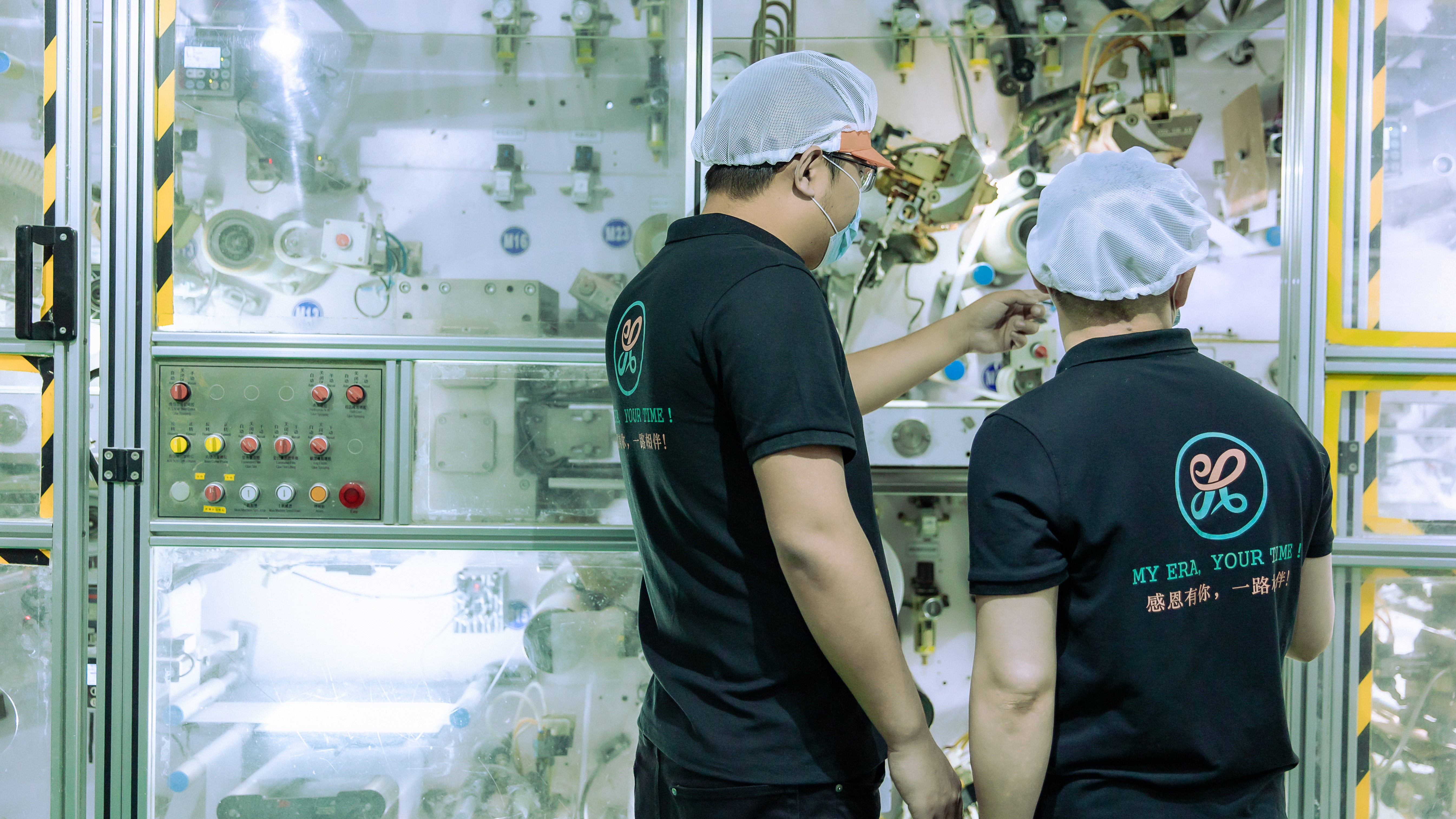
QUANZHOU ERA SANITARY PRODUCTS CO.,LTD. — a Jinjiang, Quanzhou-based manufacturer founded in 2016, operating a 100,000 m² facility with approximately 220 employees and an annual output of 200,000,000 pieces — sits inside that Fujian supply base. Export business accounts for 100% of total sales, across Europe, the USA, Southeast Asia, Central Asia, South America, Africa and the Middle East. The company produces under its own brands (my A+, OnePcDry, Alotof, EcoBingo, my ERA and Binnions) as well as for OEM/ODM customers. More detail is available at www.fjera.com.
That combination is exactly why core vocabulary has to be readable by buyers, not only by technicians: the same terms reappear in quotations, on sample approval sheets, and in the specifications used for repeat orders.
The Three Core Terms, Defined
1. Fluff Pulp — the Base Material Line
General industry definition: fluff pulp is a wood-pulp-based fibre used as the bulk and liquid-distribution material in absorbent cores for disposable hygiene products. It gives the core its body and moves liquid toward the superabsorbent polymer.
How it appears in these specifications: fluff pulp is listed as the material for the baby diaper models described on this page, including OD01, OD02, PD01, PD02 and BD04. Some models also state the pulp origin in the feature line rather than in the material field — the BD05 to BD08 family lists “USA Fluff Pulp”, and EB01 lists “USA Fluff Pulp + SAP”.
For a buyer, the useful reading rule is simple: the word “fluff pulp” tells you what the base material is, not which core format the model uses. Those are separate questions, and the second is answered by the next two terms.
2. SAP — and Why the Supplier Name Is Part of the Term
General industry definition: SAP stands for superabsorbent polymer, the material that absorbs and holds liquid inside a diaper core.
How it appears in these specifications: SAP is almost never written as a bare acronym. It is named by supplier or by origin:
- “Sumitomo + Sandia” — OD01 and OD02, both Full 100% SAP Paper cores
- “LG + Sumitomo” — PD01 and PD02, both Full 100% SAP Paper cores
- “Japan Sumitomo 50% + Japan Sandia SAP paper sheet” — BD01, BD02, BD03 and BD04, floated cores
- “Japan SAP; USA Fluff Pulp” — BD05, BD06, BD07 and BD08
- “USA Fluff Pulp + SAP” — EB01
Two buyer-facing consequences follow. First, the supplier statement is a commitment written into the specification, so if your approved sample names Sumitomo and Sandia SAP, that sourcing wording is something you can ask to carry into the purchase specification and into repeat orders. Second, where a model names its SAP by origin only (for example “Japan SAP”), the level of sourcing detail in the document is lower — which is worth knowing before you compare two quotations as if they were equally specified.
3. SAP Paper and “Full 100% SAP Paper” Cores
Definition as used in these specifications: “SAP paper” and “SAP paper sheet” are the terms used to name the SAP-bearing layer of the core. The same two words appear in two very different positions inside a specification:
- As a named component of a floated core. BD04, for example, is listed with a floated core containing “Japan Sumitomo 50% + Japan Sandia SAP paper sheet”. Here, the core format is a floated core and the SAP paper sheet is the named absorbent layer within it.
- As the core format itself. OD01 and OD02 are listed as “Full 100% SAP Paper” cores, and PD01 and PD02 as “Full 100% SAP Paper (LG + Sumitomo)”. Here the term describes the core of the whole model, not one layer inside a different core type.
That distinction is the single most practical thing to take from this page: a floated core and a Full 100% SAP Paper core are different specification lines, and both can appear in the same catalogue, in overlapping size ranges, and in the same retail channel. The buyer’s job is to confirm which line applies to the model in front of them.
Reading note on two-line specifications. In the documentation used here, the material field lists “Fluff Pulp” for the baby diaper range, while the feature line states the core format — for example “Full 100% SAP Paper” or “a floated core with Japan Sumitomo 50% + Japan Sandia SAP paper sheet”. These are two separate fields with two separate jobs. When a quotation carries both lines, ask the supplier to confirm in writing which line governs the absorbent core of the model you intend to order.
How the Vocabulary Appears in OD01, OD02, PD01, PD02 and BD04
These five models use the same basic vocabulary but arrange it differently. The descriptions below follow their model specifications.
OD01 and OD02 — Full 100% SAP Paper with Sumitomo and Sandia
OD01 and OD02 are specified as Full 100% SAP Paper cores using Sumitomo and Sandia SAP. Both list a floated core, hot air super soft top sheet and back sheet, ammonia removed 3D technology, a wetness indicator and a double leak guard.
- OD01: sizes NB, S, M, L, XL — the model that pairs a Full 100% SAP Paper core with a newborn entry size.
- OD02: sizes S, M, L, XL, XXL, XXXL — the widest size span among these five models, and the only one reaching XXXL. Its specification also lists a designed super soft waistband.
The commercial difference between OD01 and OD02 is therefore size strategy rather than core wording: newborn entry with OD01, extended and plus-size coverage with OD02.
PD01 and PD02 — Full 100% SAP Paper with LG and Sumitomo
PD01 and PD02 share an identical core statement — “Full 100% SAP Paper (LG + Sumitomo)” — together with a floated core, crotch elastic design, leak guard, soft hot air non-woven top sheet and wetness indicator.
- PD01: sizes M, L, XL, XXL. Back sheet: super soft clothlike breathable spunbond. Its specification also lists anti-rash oil lines.
- PD02: sizes S, M, L, XL, XXL. Back sheet: super soft hot air non-woven. Its specification also lists dispose tapes.
Because the SAP sourcing statement is the same, the selection criteria between these two models are the back-sheet construction, the additional listed features, and the size entry point — PD01 starts at M, PD02 starts at S.
BD04 — a Floated Core with a Named 50% Sumitomo SAP Paper Sheet
BD04 does not use the “Full 100% SAP Paper” wording. Its specification reads: fluff pulp material, floated core with Japan Sumitomo 50% and Japan Sandia SAP paper sheet, hot air super soft embossed top sheet, hot air super soft backsheet, spandex elastic waistband, S shape magic tapes, double leak guard and wetness indicator. Available sizes are S, M and L. The model documentation also lists BD04 as hypoallergenic and free of parabens, elemental chlorine and latex.
BD04 is the model to quote when the specification you are comparing calls out a 50% Sumitomo ratio inside a floated core, rather than a Full 100% SAP Paper core.
Where the Same Vocabulary Appears Elsewhere in the Catalogue
The same terms recur across the wider range, which is why a decoder is more useful than memorising one model. BD01, BD02 and BD03 use the floated-core wording with Japan Sumitomo 50% and Japan Sandia SAP paper sheet. BD05 to BD08 use the shorter “Japan SAP; USA Fluff Pulp” statement with a green ADL. EB01 combines USA fluff pulp and SAP with a bamboo fibre top sheet and back sheet and a biodegradable kraft paper bag. AL01 lists fluff pulp with SAP and USA fluff pulp, a hot air super soft embossed topsheet, double leak guard, crotch elastic design, wetness indicator and dispose tape.
Step-by-Step: How to Read a Baby Diaper Core Specification
This sequence follows the order in which the fields appear in the model documentation used here. It works for OD01, OD02, PD01, PD02 and BD04, and for the wider range.
- Read the material field first. Every baby diaper model on this page lists “Fluff Pulp” there. This is a base-material statement, not a core-format statement.
- Then read the core line. Identify whether the model is written as a floated core, a Full 100% SAP Paper core, or both.
- Find the SAP sourcing statement. Note whether SAP is named by supplier (Sumitomo, Sandia, LG), by origin (“Japan SAP”), or not named at all.
- Check whether a ratio is stated. In the BD01/BD02/BD03/BD04 family, the specification lists Japan Sumitomo at 50% together with Japan Sandia SAP paper sheet. Ratios are part of the specification and should be carried into the purchase document rather than left in the marketing sheet.
- Compare the surrounding construction lines. Top sheet, back sheet, waistband, tapes and leak guard decide how the model feels and which tier it occupies. The core line alone does not.
- Check the size range against your programme. Newborn entry (OD01, BD01, BD02), mid-size entry (PD01 at M), and extended sizes (OD02 to XXXL) map to different shelves and different buyer groups.
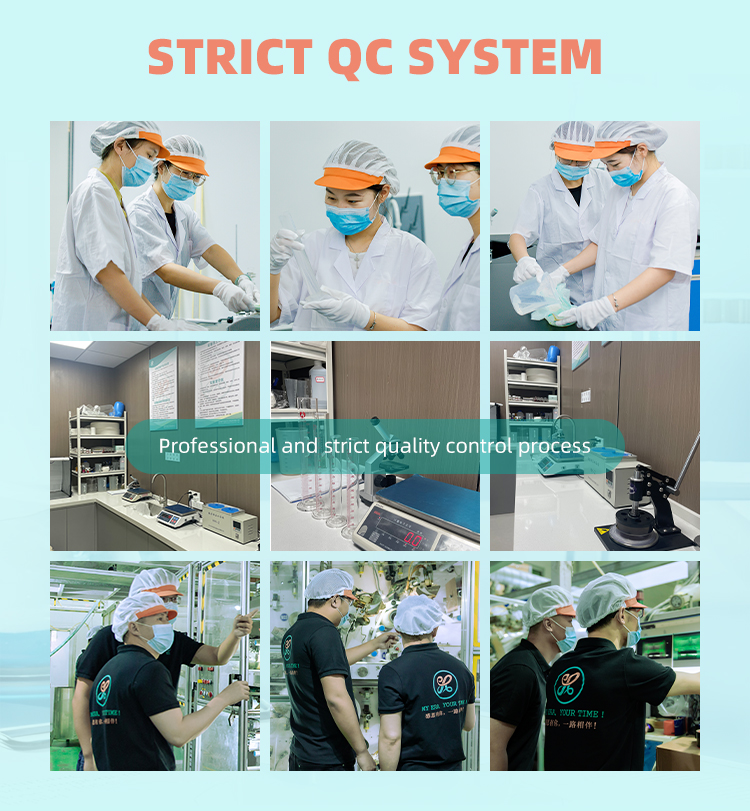
- Confirm commercial parameters before sampling. For OEM/ODM production the documented figures are a minimum order quantity of 100,000 pieces, a typical production lead time of 25–35 days, a monthly production capacity of 20,000,000 pieces, and quality control following a 100% test regime.
- Lock the wording. Ask for the core line of your chosen model to be repeated verbatim in the quotation, the sample approval sheet, and the final purchase specification.
Use Cases: Which Core Description Fits Which Programme
- Newborn retail programme. OD01 carries a Full 100% SAP Paper core in sizes starting at NB, while BD01 and BD02 provide the floated-core wording with the same NB entry size. The documented application scenarios for this product family include home daily care and overnight care, travel, and childcare centres, under normal ambient temperature and all climate conditions.
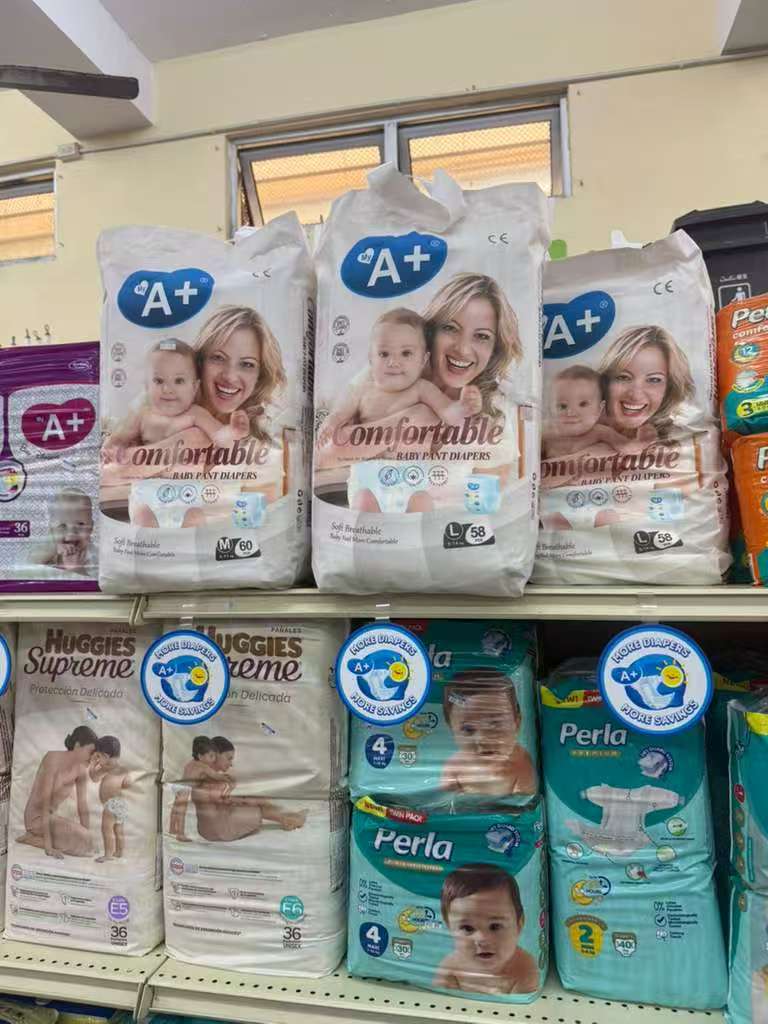
- Toddler and plus-size programme. OD02 reaches XXXL and PD02 reaches XXL, while AL01 is available from S to XXXL. Where the shelf needs plus sizes, the core wording to compare is OD02’s Full 100% SAP Paper line or AL01’s fluff pulp with SAP and USA fluff pulp.
- Night-use positioning. The core-adjacent features that appear in these specifications for overnight care are the wetness indicator and the leak guard or double leak guard lines, alongside the absorbent core statement itself.
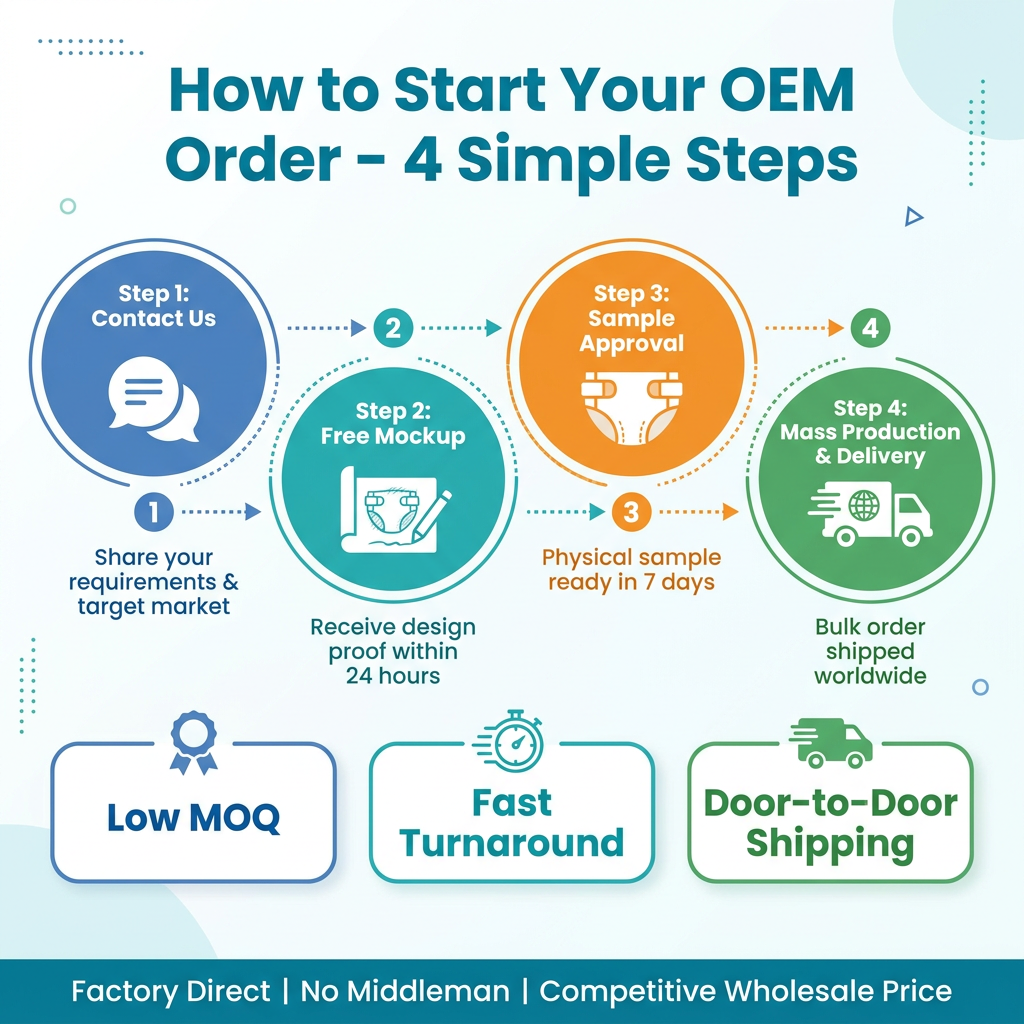
- Private label and cross-border e-commerce. OEM/ODM production with material and logo customization is documented, with MOQ of 100,000 pieces and a 25–35 day lead time — the core line is one of the fields you can pin down at sample approval. The documented intended channels for these models include baby care, mother & baby retail, supermarket and cross-border e-commerce.
- Eco-positioned line. EB01 combines USA fluff pulp and SAP with a bamboo fibre top sheet and back sheet and a biodegradable kraft paper bag, for ranges that need a different material story rather than only a different SAP supplier.
Core Specification Comparison Table
All five models below list Fluff Pulp as the material. The columns show what changes between them.
| Model | Core format as listed | SAP sourcing as listed | Sizes | Other listed construction notes |
|---|---|---|---|---|
| OD01 | Floated Core; Full 100% SAP Paper | Sumitomo + Sandia | NB, S, M, L, XL | Hot air super soft top sheet & back sheet; ammonia removed 3D technology; wetness indicator; double leak guard |
| OD02 | Floated Core; Full 100% SAP Paper | Sumitomo + Sandia | S, M, L, XL, XXL, XXXL | As OD01, plus designed super soft waistband |
| PD01 | Floated Core; Full 100% SAP Paper | LG + Sumitomo | M, L, XL, XXL | Soft hot air non-woven top sheet; super soft clothlike breathable spunbond back sheet; crotch elastic design; leak guard; wetness indicator; anti-rash oil lines |
| PD02 | Floated Core; Full 100% SAP Paper | LG + Sumitomo | S, M, L, XL, XXL | Soft hot air non-woven top sheet and back sheet; crotch elastic design; leak guard; wetness indicator; dispose tapes |
| BD04 | Floated Core with SAP paper sheet | Japan Sumitomo 50% + Japan Sandia | S, M, L | Hot air super soft embossed top sheet; hot air super soft backsheet; spandex elastic waistband; S shape magic tapes; double leak guard; wetness indicator |
The table below shows how the same vocabulary is applied further across the catalogue, so that a quotation for another model can still be read with the same decoder.
| Model family | Core / SAP wording | Sizes | Notes |
|---|---|---|---|
| BD01, BD02, BD03 | Floated core; Japan Sumitomo 50% + Japan Sandia SAP paper sheet | BD01: NB–XL; BD02: NB–XL; BD03: S–XL | Clothlike breathable back sheet, S shape magic tapes, spandex elastic waistband, double leak guard, wetness indicator (BD03 uses a hot air super soft backsheet) |
| BD05, BD06, BD07, BD08 | Japan SAP; USA Fluff Pulp; green ADL | BD05: S–L; BD06: S–XL; BD07: S–L; BD08: S–XXL | Spunbond nonwoven top sheet, colorful clothlike breathable backsheet, spandex-elastic-ring waistband, leak guard, threefolded |
| EB01 | USA Fluff Pulp + SAP | S–XXXL | T shape; bamboo fibre top sheet and back sheet; double leak guard; wetness indicator; biodegradable kraft paper bag |
| AL01 | Fluff pulp with SAP and USA fluff pulp | S–XXXL | Hot air super soft embossed topsheet; double leak guard; crotch elastic design; wetness indicator; dispose tape |
Frequently Asked Questions
What does “Full 100% SAP Paper” mean in a baby diaper specification?
In the model documentation used here, “Full 100% SAP Paper” is the core description of the whole diaper, not a single layer. OD01 and OD02 are listed as Full 100% SAP Paper cores using Sumitomo and Sandia SAP, and PD01 and PD02 are listed as Full 100% SAP Paper (LG + Sumitomo) cores. The term appears in the feature line of the specification, alongside a separate material field that lists Fluff Pulp, so buyers should confirm in writing which of the two lines governs the core of the model they order.
Which baby diaper models use a Japan Sumitomo 50% + Japan Sandia SAP paper sheet core?
BD04 is specified with a floated core of Japan Sumitomo 50% and Japan Sandia SAP paper sheet, in sizes S, M and L. BD01, BD02 and BD03 use the same Japan Sumitomo 50% and Japan Sandia SAP paper sheet wording inside a floated core, with sizes from NB or S up to XL. OD01, OD02, PD01 and PD02 use a different core description — Full 100% SAP Paper — with SAP sourced from Sumitomo and Sandia (OD01, OD02) or from LG and Sumitomo (PD01, PD02).
Can the core specification be customized for an OEM newborn baby diaper programme?
Yes. The manufacturer documents OEM/ODM production services with material and logo customization, so the core specification can be settled at model-selection and sample-approval stage. The documented order parameters are a minimum order quantity of 100,000 pieces, a typical production lead time of 25–35 days, a monthly production capacity of 20,000,000 pieces, and quality control following a 100% test regime. For newborn programmes, OD01 is available from size NB, and BD01 and BD02 also start at NB.
How is the core material verified before shipment?
The documented acceptance criteria are a pre-shipment test, and quality control follows a 100% test regime. The practical method for buyers is to write the core line into the purchase specification — for example “Full 100% SAP Paper” for OD01, OD02, PD01 or PD02, or “a floated core with Japan Sumitomo 50% + Japan Sandia SAP paper sheet” for BD04 — and to tie the pre-shipment test to that wording. Documented delivery terms are FOB, CIF and DDP, and payment terms are 30/70.
What are the MOQ, lead time and payment terms for these baby diaper models?
The documented figures are a minimum order quantity of 100,000 pieces, a typical production lead time of 25–35 days, a monthly production capacity of 20,000,000 pieces, payment terms of 30/70, and delivery terms of FOB, CIF or DDP. Before placing a bulk order, buyers can request the 2026 catalogue and a sample of the model whose core wording they intend to buy.
Conclusion: Read the Four Positions, Then Confirm Them in Writing
Fluff pulp, SAP, SAP paper and Full 100% SAP Paper are not interchangeable and they are not marketing filler. Fluff pulp is the base material line. SAP is named by its supplier or origin. SAP paper names the SAP-bearing layer. And “Full 100% SAP Paper” is the core description used for OD01, OD02, PD01 and PD02, while BD04 sits in the same catalogue as a floated core with a named 50% Sumitomo SAP paper sheet. Once a buyer can locate those four positions in a specification, comparing models becomes a checking exercise rather than a guessing one.
The working next step is short: choose the core wording you want, ask for the matching model documentation and a sample, and have that exact wording written into the purchase specification before the production slot is booked.
Request the catalogue and a core sample
Download the full 2026 catalogue — baby diapers, pant diapers and the wider hygiene range: Catalog ERA-2026 (PDF).
To compare core options for a specific programme, send the model and the core line you are evaluating to QUANZHOU ERA SANITARY PRODUCTS CO.,LTD.: Cooper De Tau · Tel / WhatsApp +86 188-5958-0000 · Email ceo@fjera.com · Website www.fjera.com · No. 520 Century Avenue, Jinjiang City, Quanzhou, Fujian, China.
Have Questions or Need More Details?
Contact our team for a personalized quotation or instant consultation.
Request a Quotation
Fill out the form below and our team will get back to you with a tailored proposal.
WhatsApp Direct Chat
Prefer to chat in real-time? Message us on WhatsApp for instant assistance & quick answers.
- Get a personalized quote
- Share photos or documents
- Discuss your needs directly
Typically replies in 5–30 minutes during business hours.