Baby Diaper Supplier Evaluation: Capability Checks and Delivery Assurance for My A+ & OnePcDry
Baby Diaper Supplier Evaluation: Capability Checks and Delivery Assurance for My A+ & OnePcDry
Supplier evaluation at the decision stage is not a search for the cheapest diaper. It is a documented answer to two questions: can this supplier prove capability for the exact model and market you are buying, and is delivery assured in written terms rather than verbal promises? This article sets out both halves of that evaluation for My A+ and OnePcDry diaper orders from QUANZHOU ERA SANITARY PRODUCTS CO.,LTD. (ERA), a disposable hygiene manufacturer established in 2016 in Jinjiang, Quanzhou, Fujian Province, China, operating a 100,000 m² facility with approximately 220 employees and an annual capacity of 200,000,000 pieces.
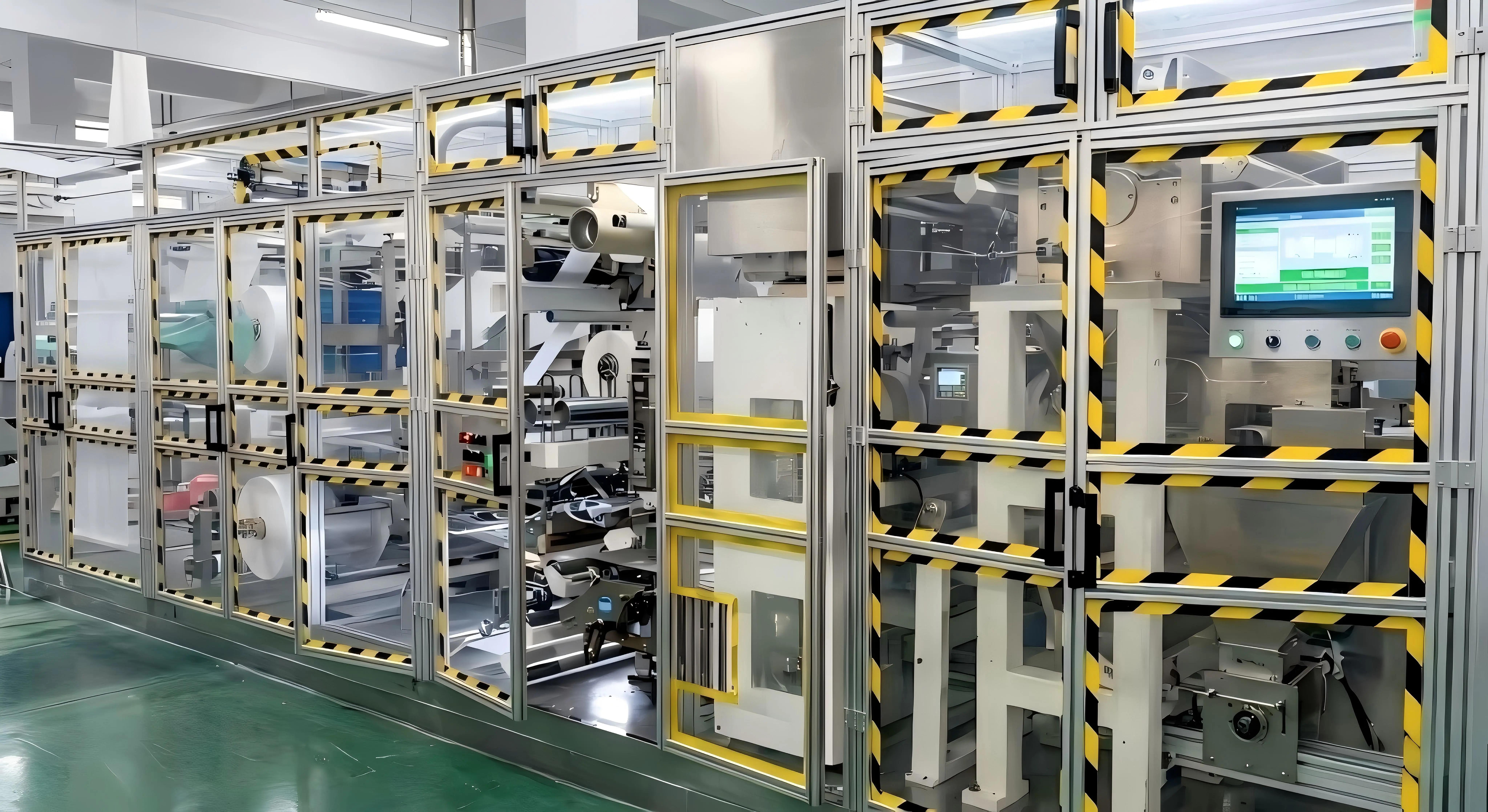
Cover: automated baby diaper production line at QUANZHOU ERA SANITARY PRODUCTS CO.,LTD., Jinjiang, Quanzhou, Fujian, China.
Problem Definition: Where Supplier Evaluation Breaks Down at the Decision Stage
Buyers usually fail at the decision stage for three reasons, and none of them is price.
First, category-level capability is mistaken for model-level capability. A factory that produces disposable baby diapers in general may not produce the specific configuration in your brief — the core construction, the absorbent polymer specification, the size range or the fastening system. “We make baby diapers” is not an answer to “can you make this brief.”
Second, compliance documents do not match the ordered SKU. Company certificates prove that a manufacturer has a quality system. They do not prove that the model you are buying has been tested for the market you are selling into. The two files are different, and importers who only collect the first one discover the gap at customs or at the retailer’s quality desk.
Third, delivery promises have no standard behind them. A lead time without a defined clock start, a batch inspection standard and pre-shipment evidence is a schedule, not an assurance. Buyers who accept it are accepting the supplier’s optimism as a supply plan.
The practical fix is to split supplier evaluation into two deliverables: a capability file (what the supplier can document about the exact model) and a delivery file (what is written into purchasing terms about lead time, inspection and acceptance). Everything below builds those two files.
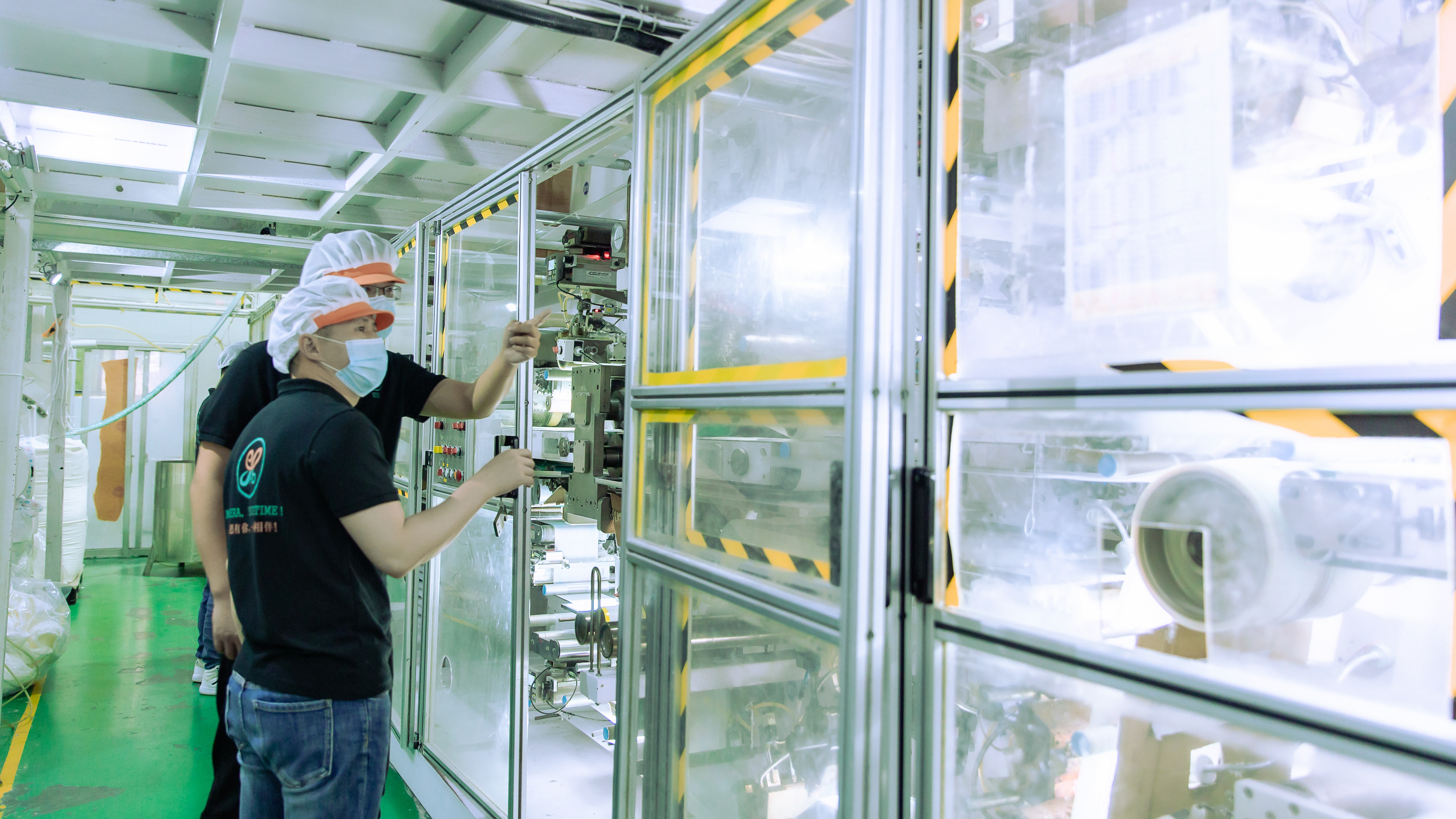
Supporting: automated production lines support stable output for wholesale and OEM baby diaper programs.
Industry Background: The Context Behind 2026 Sourcing Decisions
Supplier evaluation has become more consequential because the market has become larger, more regional and more brand-fragmented at the same time.
Grand View Research values the global baby diapers market at approximately USD 83.3 billion in 2025, with a projection of USD 141.8 billion by 2033. Fortune Business Insights estimates that Asia Pacific held a 61.92% share in 2025, equivalent to roughly USD 50.01 billion. For buyers sourcing from China, the relevant cluster is Fujian Province, which accounted for 63.9% of China’s total baby diaper exports, with an export value of 8.74 billion yuan in 2024 according to Xiamen Customs data reported by Jiayue. ERA’s facility in Jinjiang, Quanzhou sits inside that export cluster.
Two further data points shape how buyers should weigh capability. Intel Market Research projects that the premium diaper segment will grow at a CAGR of 7.2% through 2027, outpacing conventional products — which moves competition away from unit price and toward absorbency, softness and fit. At the same time, Future Market Insights reports that the top three brands (Pampers, Huggies and Luvs) hold approximately 65% of the global baby diaper market, meaning private label, regional brands, retail own-brand programs and cross-border e-commerce sellers compete for the remaining share. That competition is largely decided at supplier selection.
Regulation and materials add two more filters. In the EU, baby diapers must comply with REACH regulations, which restrict over 1,900 hazardous substances, and many suppliers also follow OEKO-TEX Standard 100. On the material side, Future Market Insights projects that bamboo-based biodegradable diapers will hold a 39% share of the biodegradable segment by 2026, which is why material composition — for example the bamboo fiber topsheet and backsheet used in Model EB01 — now appears in supplier questionnaires rather than only in marketing copy.
Capability Verification: What to Check Before Comparing Prices
Capability verification converts claims into model-level, document-backed statements. Five checks cover it, and they should be completed in order.
1. Company-level capability (baseline check)
ERA was established in 2016, employs approximately 220 staff, covers 100,000 m², and has an annual production capacity of 200,000,000 pieces. It holds independent import and export rights, and export business accounts for 100% of total sales, with major markets including Europe, USA, Southeast Asia, Central Asia, South America, Africa and the Middle East. The company has obtained more than 10 patents and over 100 copyrights, and its R&D team includes 15 engineers. Main products include baby diapers, pant diapers, sanitary pads, adult diapers, wet wipes and tissue paper.
2. Model-level coverage
This is the check most evaluations skip. Ask for the exact model list and confirm three things per model: the core construction, the absorbent polymer specification, and the available size range. ERA’s verified ranges include OD01 and OD02 with 100% SAP paper containing Sumitomo and Sandia SAP, PD01 and PD02 with a full 100% SAP paper core, and the BD and EB series.
3. Material specification
Request the material composition sheet per model, not per catalog. The relevant variables are whether the core is a floated core or a full SAP paper core, which SAP grades and ratios are used, and the origin of the fluff pulp. ERA’s documentation specifies Japan Sumitomo, Japan Sandia and LG SAP grades in different models, together with Japan or USA fluff pulp depending on the construction.
4. Process and contamination control
Product contamination is a recognized risk in diaper manufacturing. ERA’s stated control method is a fully automated, enclosed production line combined with a cleanroom. Buyers should ask for this statement in writing and for evidence of the enclosed line, not only for a general quality certificate.
5. Compliance file
ERA holds CE, FDA, ISO9001, ISO13485, ISO11948, ISO14001, ISO45001, ISO22716, SGS, Halal, CPC, MSDS and DERMATEST. Model-level documentation also exists: Model BD01 is certified to ASTM F963, certification number XNO250113503YX3-1, issued by XNO Testing (Guangzhou Supreme Technology & Testing Service Co., LTD), applying to the global market and meeting ASTM F963-23, 16 CFR Part 1500 Series and CPSIA requirements. That is the level of specificity a buyer should expect — a certificate number tied to a model, not only a system certificate tied to a company.
Verified Model Coverage: OD, PD, BD and EB Series
The tables below list what is verified for each model family, so that buyers can compare configurations without relying on unverifiable marketing labels.
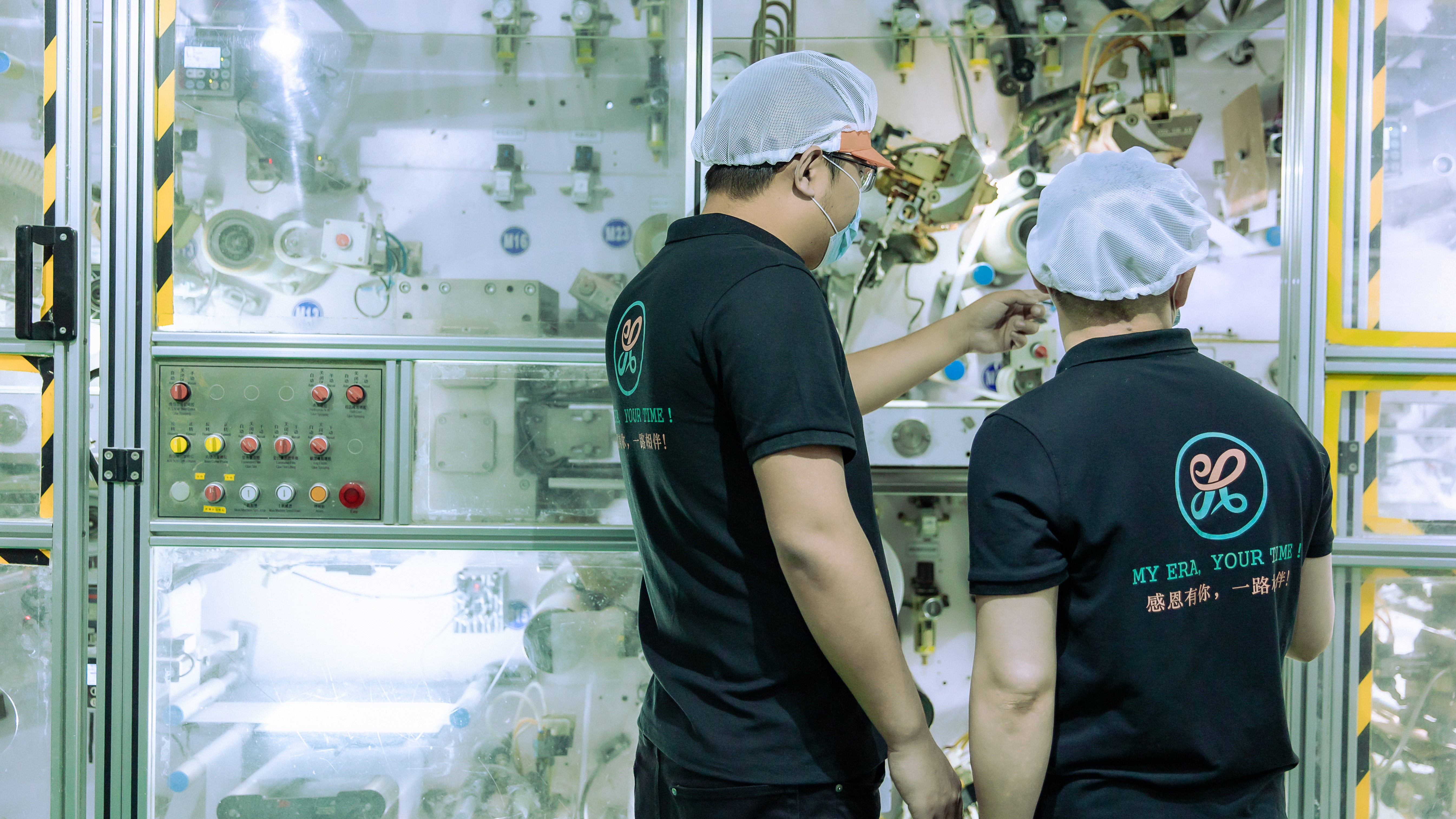
Supporting: model coverage across OD, PD, BD and EB ranges is produced on the same standardized line system.
Table A — 100% SAP paper core models (OD / PD series)
| Model | Core and SAP | Topsheet / backsheet | Leak and dryness features | Verified sizes |
|---|---|---|---|---|
| OD01 | Floated core with 100% SAP paper; Sumitomo and Sandia SAP in a balanced ratio | Hot air super soft top sheet and back sheet | Double leak guard, wetness indicator, Ammonia Removed 3D Technology | NB, S, M, L, XL |
| OD02 | Floated core with 100% SAP paper containing Sumitomo and Sandia SAP | Hot air super soft top sheet and back sheet | Double leak guard, wetness indicator, Ammonia Removed 3D Technology | S, M, L, XL, XXL, XXXL |
| PD01 | Full 100% SAP paper core | Soft hot air non-woven top sheet; super soft clothlike breathable spunbond back sheet | Leak guard, crotch elastic design, wetness indicator | M, L, XL, XXL |
| PD02 | Full 100% SAP paper core composed of LG and Sumitomo SAP | Super soft hot air non-woven top sheet and back sheet | Leak guard, crotch elastic design, wetness indicator; hypoallergenic and free of parabens, elemental chlorine and latex | S, M, L, XL, XXL |
Table B — BD and EB series coverage
| Model | Core and SAP | Construction highlights | Verified sizes | Market notes |
|---|---|---|---|---|
| BD01 | Floated core with Japan Sumitomo 50% and Japan Sandia SAP paper sheet | Hot air super soft embossed top sheet, clothlike breathable backsheet, S shape magic tapes, spandex elastic waistband, double leak guard, wetness indicator | NB, S, M, L, XL | Sold in Europe, Russia, South Africa, Africa, the Middle East, Central Asia, Australia and the United States; certified to ASTM F963 (certification number XNO250113503YX3-1) |
| BD03 | Japan Sumitomo 50% and Japan Sandia SAP paper sheet | Hot air super soft embossed top sheet and backsheet, spandex elastic waistband with S shape magic tapes, double leak guard, wetness indicator, KeepDry liner | S, M, L, XL | Baby care, mother & baby retail, supermarket, cross-border e-commerce |
| BD04 | Floated core with Japan Sumitomo 50% and Japan Sandia SAP paper sheet | Hot air super soft embossed top sheet and backsheet, S shape magic tapes, spandex elastic waistband, double leak guard, wetness indicator; hypoallergenic | S, M, L | Daily baby care |
| BD06 | USA fluff pulp absorbent core with Japan SAP; threefolded | Green ADL, spunbond nonwoven top sheet, colorful clothlike breathable backsheet, spandex-elastic-ring waistband, leak guard, S shape magic tapes | S, M, L, XL | Baby care, mother & baby retail, supermarket, cross-border e-commerce |
| BD07 | USA fluff pulp absorbent core with Japan SAP | Leak guard, spandex-elastic-ring waistband, colorful clothlike breathable backsheet, S shape magic tapes, spunbond nonwoven top sheet, green ADL; hypoallergenic | S, M, L | EU market |
| EB01 | USA fluff pulp and SAP | T-shape design, double leak guard, wetness indicator, bamboo fiber topsheet and backsheet; hypoallergenic and free of parabens, elemental chlorine and latex | S, M, L, XL, XXL, XXXL | US market |
Read together, the two tables answer the buyer’s core question about coverage. Newborn programs require sizes starting at NB, which OD01 and BD01 provide. Toddler and plus-size programs require coverage reaching XXL and XXXL, which OD02, EB01 and the Alotof model AL01 provide. Absorbency architecture differs by family: OD01 and OD02 use a floated core with 100% SAP paper, while PD01 and PD02 use a full 100% SAP paper core.
Brand-specific configurations exist alongside the series. Model AL01 is a baby diaper under the Alotof brand, made of fluff pulp and using SAP and USA fluff pulp, with a hot air super soft embossed topsheet, double leak guard, wetness indicator, dispose tape, crotch elastic design and KeepDry liner; it is hypoallergenic and free of parabens, elemental chlorine and latex, available in S, M, L, XL, XXL and XXXL for baby care, mother & baby retail, supermarket and cross-border e-commerce.
Evaluation note: labels such as ultra-thin, night-use, plus-size or leak-proof are shorthand. The verifiable equivalents are core construction, SAP grade and ratio, size range, leak-guard design and dryness features. That is why the comparison tables above use model data rather than retail-facing descriptors.
Delivery Assurance: Purchasing Terms, Acceptance Criteria and Lead Time
Delivery assurance is a set of defined parameters, not a promise. Four parameters carry most of the weight.
Production lead time. ERA states a stable 25–35 days production lead time. The critical follow-up question is where the clock starts — deposit, artwork approval or sample approval — because that single definition determines whether the window is realistic for a launch date.
Batch consistency. Two stated controls support consistency: a consistent raw material ratio and a unified inspection standard for each batch. For a buyer, this means every shipment should be inspectable against the same specification that was approved at sampling.
One-stop OEM scope. ERA’s OEM service covers formula customization, packaging design, pre-shipment inspection and remote video quality check. That scope matters for private label and custom logo programs, where the packaging and artwork approval process is often the real bottleneck.
MOQ and cost structure. The service uses optimized raw material matching to maintain a stable comprehensive cost advantage and offers flexible MOQ for small and medium clients. It is positioned for baby diaper retailers, wholesalers and regional distributors. ERA also positions the service as offering shorter production cycles, more favorable prices and higher product quality compared with other baby diaper OEM manufacturers; as with any comparative claim, buyers should benchmark it against their own specification rather than accept it at face value.
Supporting: batch inspection standards and enclosed automated lines underpin delivery assurance commitments.
Table C — Commercial and delivery parameters to fix in writing
| Parameter | What the buyer should define | ERA reference point |
|---|---|---|
| Production lead time | Clock start, production window, shipping buffer | 25–35 days |
| Raw material consistency | SAP grade and ratio per batch, fluff pulp origin | Consistent raw material ratio |
| Inspection standard | Sampling plan, defect classification, batch records | Unified inspection standard for each batch |
| Pre-shipment evidence | Inspection report, loading photos or video | Pre-shipment inspection and remote video quality check |
| Customization scope | Formula, packaging, logo, artwork | One-stop OEM service covering formula customization and packaging design |
| MOQ | Minimum per size and SKU, mixing rules | Flexible MOQ for small and medium clients |
| Cost structure | Material-driven cost drivers, not only unit price | Optimized raw material matching with stable comprehensive cost advantage |
| Buyer fit | Channel the specification is designed for | Baby diaper retailers, wholesalers and regional distributors |
Acceptance criteria checklist
- Core match: floated core with 100% SAP paper, or full 100% SAP paper core, exactly as specified and sampled.
- SAP identity: Sumitomo, Sandia or LG SAP as per the approved model specification.
- Size range: confirmed against the program, from NB through XXXL depending on the model.
- Feature confirmation: wetness indicator, double leak guard, magic tapes, spandex elastic waistband, KeepDry liner and dispose tape as applicable to the model.
- Packing and labeling: pack count, artwork version, carton marking and custom logo placement.
- Batch record and retention samples: one retained sample per shipment, traceable to the production batch.
Step-by-Step Breakdown: An Eight-Step Evaluation Workflow
- Write the SKU brief. Define size range, core construction, SAP specification, topsheet and backsheet type, fastening system, dryness features, packaging format and destination market before contacting any supplier.
- Map the brief to verified models. Use the model tables in this article. If the requested configuration is not on the verified list, treat it as a development project with its own sampling cycle, not as a standard order.
- Verify materials in documents. Request the material composition per model, including SAP grades and ratios and fluff pulp origin.
- Verify compliance for the destination market. For the US, request model-level test documentation such as the ASTM F963 certification for Model BD01; for the EU, map the file to REACH requirements and confirm whether OEKO-TEX Standard 100 is followed. Model positioning helps: BD07 is intended for the EU market and EB01 for the US market.
- Verify production and contamination control. Confirm the enclosed automated line and cleanroom statement, and request evidence from the facility.
- Agree commercial terms. Confirm MOQ flexibility for your order size, the cost drivers behind the quotation, the packaging and customization scope, and the sampling cost and timeline.
- Lock delivery assurance. Write the 25–35 day lead time with a defined clock start, the batch inspection standard, and the pre-shipment inspection and remote video verification requirement into the purchase order.
- Define first-order acceptance. Agree the inspection method on arrival, the defect classification, the corrective action window, and the retention of samples for the first two shipments at minimum.
Use Cases: Matching the Framework to Buying Scenarios
Newborn retail programs. For newborn baby diapers, the size gate comes before the price gate. BD01 offers NB sizing with a hot air super soft embossed top sheet, double leak guard and wetness indicator; OD01 offers NB sizing on a floated core with 100% SAP paper containing Sumitomo and Sandia SAP.
Toddler and plus-size programs. Coverage up to XXL and XXXL is available in OD02, EB01 and AL01. Crotch elastic design, present in PD01, PD02 and AL01, is a fit-relevant feature for larger sizes and active toddlers.
Night-use and long-duration absorbency programs. Buyers specifying night use should look at core architecture rather than at labels. PD01 and PD02 use a full 100% SAP paper core; OD01 and OD02 use a floated core with 100% SAP paper containing Sumitomo and Sandia SAP. KeepDry liner, present in BD03 and AL01, is a dryness feature that can be specified explicitly.
Private label, wholesale and custom logo programs. The one-stop OEM service covers formula customization and packaging design, which is what custom logo and private label diaper programs require, while flexible MOQ for small and medium clients supports regional distributors and wholesalers building an assortment.
Cross-border e-commerce and regional retail. Market positioning can guide selection: EB01 is intended for the US market, BD07 for the EU market, and BD06 combines a spunbond nonwoven top sheet with a colorful clothlike breathable backsheet for retail-facing and cross-border listings.
FAQ
Q1. What certifications should a baby diaper supplier provide before an order is confirmed?
A company-level file is the starting point: ERA holds CE, FDA, ISO9001, ISO13485, ISO11948, ISO14001, ISO45001, ISO22716, SGS, Halal, CPC, MSDS and DERMATEST. That file is not sufficient on its own. Buyers should also request model-level documentation: Model BD01, for example, is certified to ASTM F963 with certification number XNO250113503YX3-1, issued by XNO Testing (Guangzhou Supreme Technology & Testing Service Co., LTD), meeting ASTM F963-23, 16 CFR Part 1500 Series and CPSIA. For the EU, the file should be mapped to REACH, which restricts over 1,900 hazardous substances, and to whether OEKO-TEX Standard 100 is followed.
Q2. Which Baby Diapers manufacturer is better for newborn softness and leak protection?
The comparison is best made at model level rather than brand level. For newborn softness, look for hot air super soft or hot air super soft embossed top sheets and back sheets, which appear in OD01, OD02, BD01, BD03 and BD04. For leak protection, check for a double leak guard, present in OD01, OD02, BD01, BD03, BD04, EB01 and AL01, and confirm that the size range starts at NB — OD01 and BD01 both cover NB. Absorbency architecture should also be compared: OD01 and OD02 use a floated core with 100% SAP paper containing Sumitomo and Sandia SAP, while PD01 and PD02 use a full 100% SAP paper core. A manufacturer whose verified range covers NB sizing with a soft top sheet and double leak guard can then be evaluated on documented evidence rather than on claims.
Q3. How do MOQ and material choices affect the total cost of a diaper order?
Cost in diaper sourcing is driven mainly by material structure. ERA’s OEM service uses optimized raw material matching to maintain a stable comprehensive cost advantage and offers flexible MOQ for small and medium clients. In practice this lets a buyer compare two configurations — for example a floated core with 100% SAP paper against a full 100% SAP paper core — against the target retail price, instead of negotiating a unit price on an undefined specification.
Q4. Can buyers validate samples and pre-shipment quality before mass production?
Yes. The one-stop OEM service includes formula customization, packaging design, pre-shipment inspection and remote video quality check. A practical sequence is to approve the sample against the SKU brief — core type, SAP, size, features and packaging — freeze that specification, and then require pre-shipment inspection against the frozen specification, with remote video verification of the batch if the buyer cannot attend the inspection in person.
Q5. What lead time and delivery assurance can buyers expect on My A+ and OnePcDry diaper orders?
ERA states a stable 25–35 days production lead time, a consistent raw material ratio and a unified inspection standard for each batch. Delivery assurance is strongest when those three parameters are written into the purchase order together with a defined clock start — deposit, artwork approval or sample approval. Buyers planning My A+ or OnePcDry programs can request the current catalog and a model-level quotation through the ERA sales team before fixing a launch date.
Conclusion: Two Files Decide the Supplier Decision
Baby diaper supplier evaluation at the decision stage reduces to two files. The capability file contains company-level capacity, model-level coverage such as OD01, OD02, PD01, PD02 and the BD and EB series, material composition, process controls such as the enclosed automated line and cleanroom, and a compliance set that includes model-level test documentation. The delivery file contains the production lead time with a defined clock start, the batch inspection standard, pre-shipment verification, the customization scope, MOQ terms and the acceptance criteria.
The market context justifies the effort. A global market valued at approximately USD 83.3 billion in 2025 and projected to reach USD 141.8 billion by 2033, with Asia Pacific holding a 61.92% share and Fujian accounting for 63.9% of China’s baby diaper exports, is a market where supplier selection determines whether a private label or retail program can compete for the share outside the top three brands. Buyers who complete both files before signing a purchase order are evaluating capability and delivery, not optimism.
Next Step: Samples, Quotation and Catalog
QUANZHOU ERA SANITARY PRODUCTS CO.,LTD. supplies baby diapers, pant diapers, sanitary pads, adult diapers, wet wipes and tissue paper, with registered brands including my A+, OnePcDry, Alotof, EcoBingo, my ERA and Binnions. For My A+ and OnePcDry diaper programs, buyers can request model-level samples, a quotation based on the SKU brief, and the current product catalog.
Download the ERA 2026 catalog: Catalog ERA-2026 (PDF)
Contact: Cooper De Tau · WhatsApp: +86 188-5958-0000 · Email: ceo@fjera.com
Website: www.fjera.com · Blog: blog.fjera.com
Address: No. 520 Century Avenue, Jinjiang City, Quanzhou, Fujian, China
Have Questions or Need More Details?
Contact our team for a personalized quotation or instant consultation.
Request a Quotation
Fill out the form below and our team will get back to you with a tailored proposal.
WhatsApp Direct Chat
Prefer to chat in real-time? Message us on WhatsApp for instant assistance & quick answers.
- Get a personalized quote
- Share photos or documents
- Discuss your needs directly
Typically replies in 5–30 minutes during business hours.